

Iura
Award
An SJSU Grant/Award and RSCA
Fellowship Project Recipient.
What We Delivered
UX Research
App Design
Branding
Role
Primary Research
Visual Design System
User Experience
A physician-matching system that goes beyond superficial criteria.
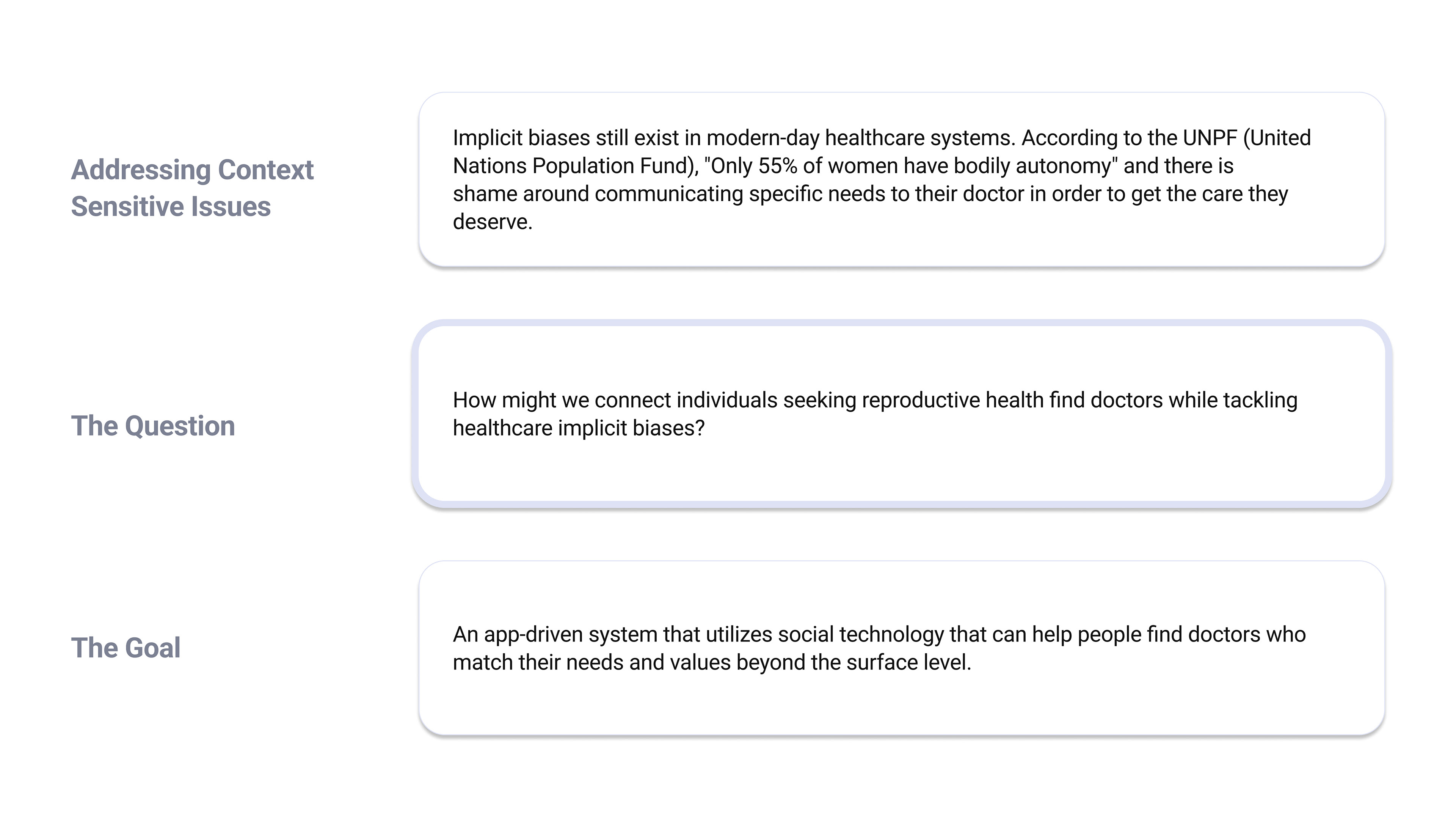
Health inequity remains a prevalent and pressing safety concern. Legislation, unsafe medical practices, and inadequate sex education for the youth collectively contributes to this significant problem.
This project has received recognition from San Jose State University's Research Fellowship Program and has been honored with funding awards.
Overview
Building the Themes

To better understand the challenges of implicit biases on OB-GYN patient care, we engaged with gynecologists who were willing to share their insights.
Through these connections, we learned about the existing gaps and improvements made in the field.
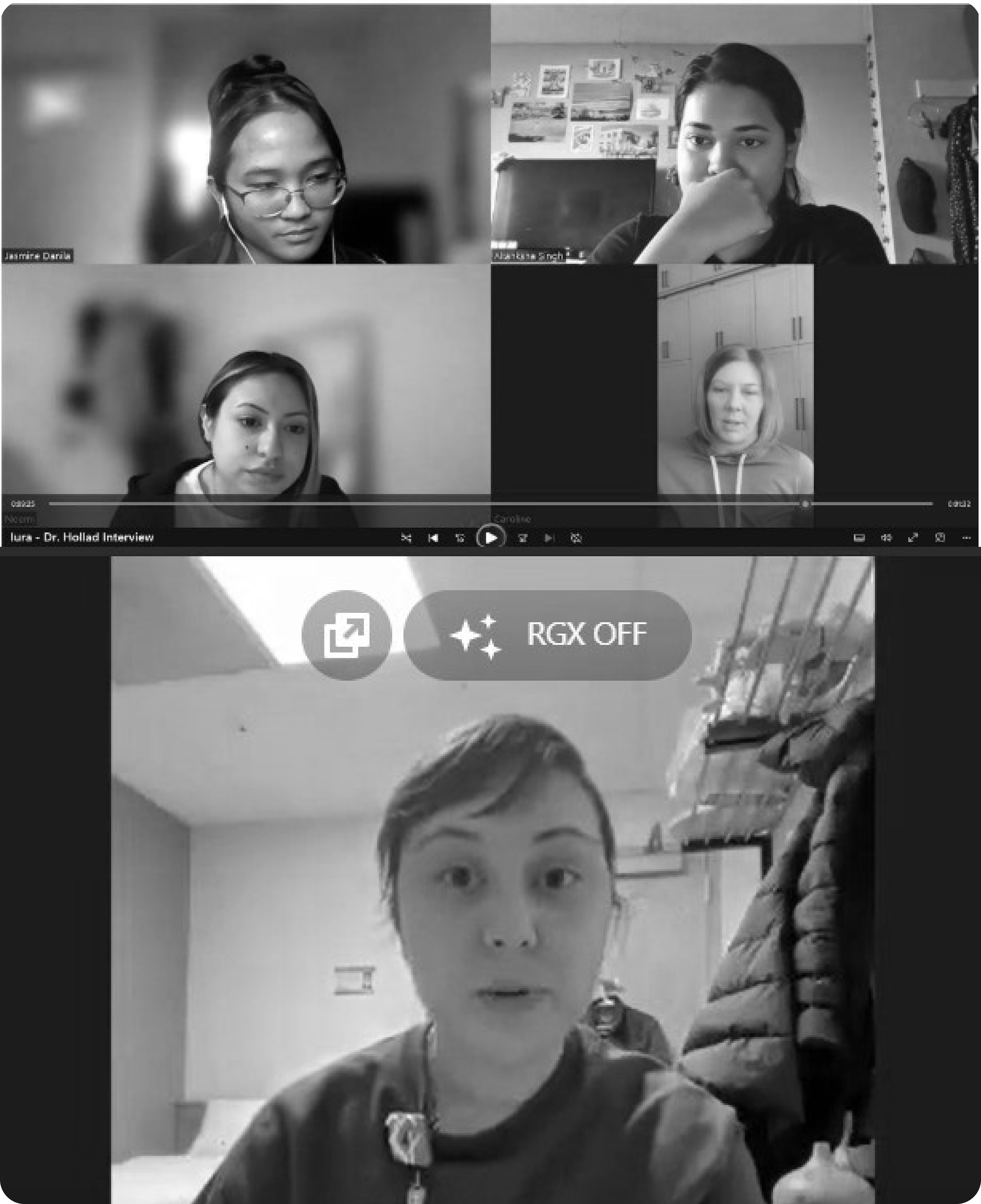
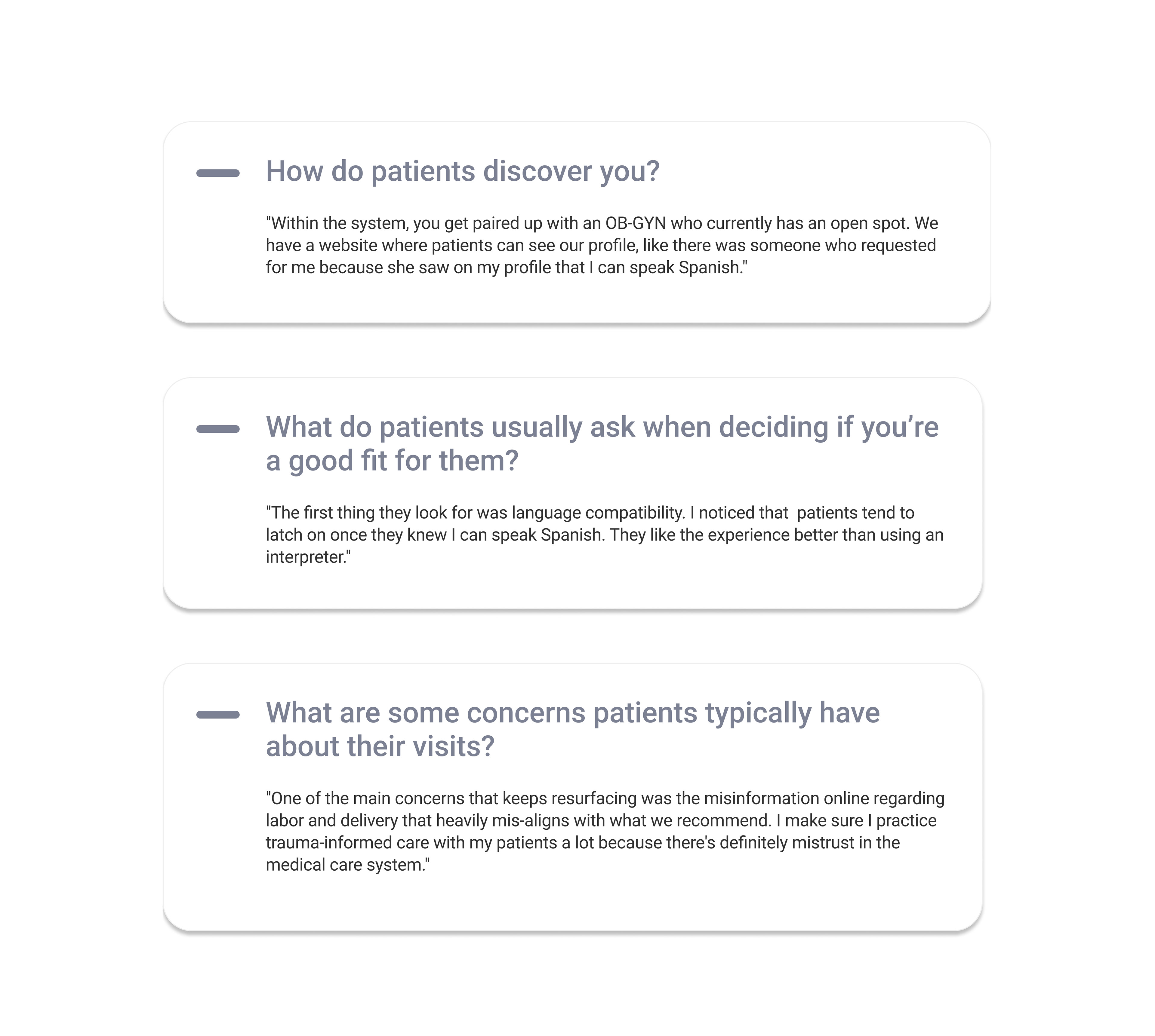
10 Participant Interviews
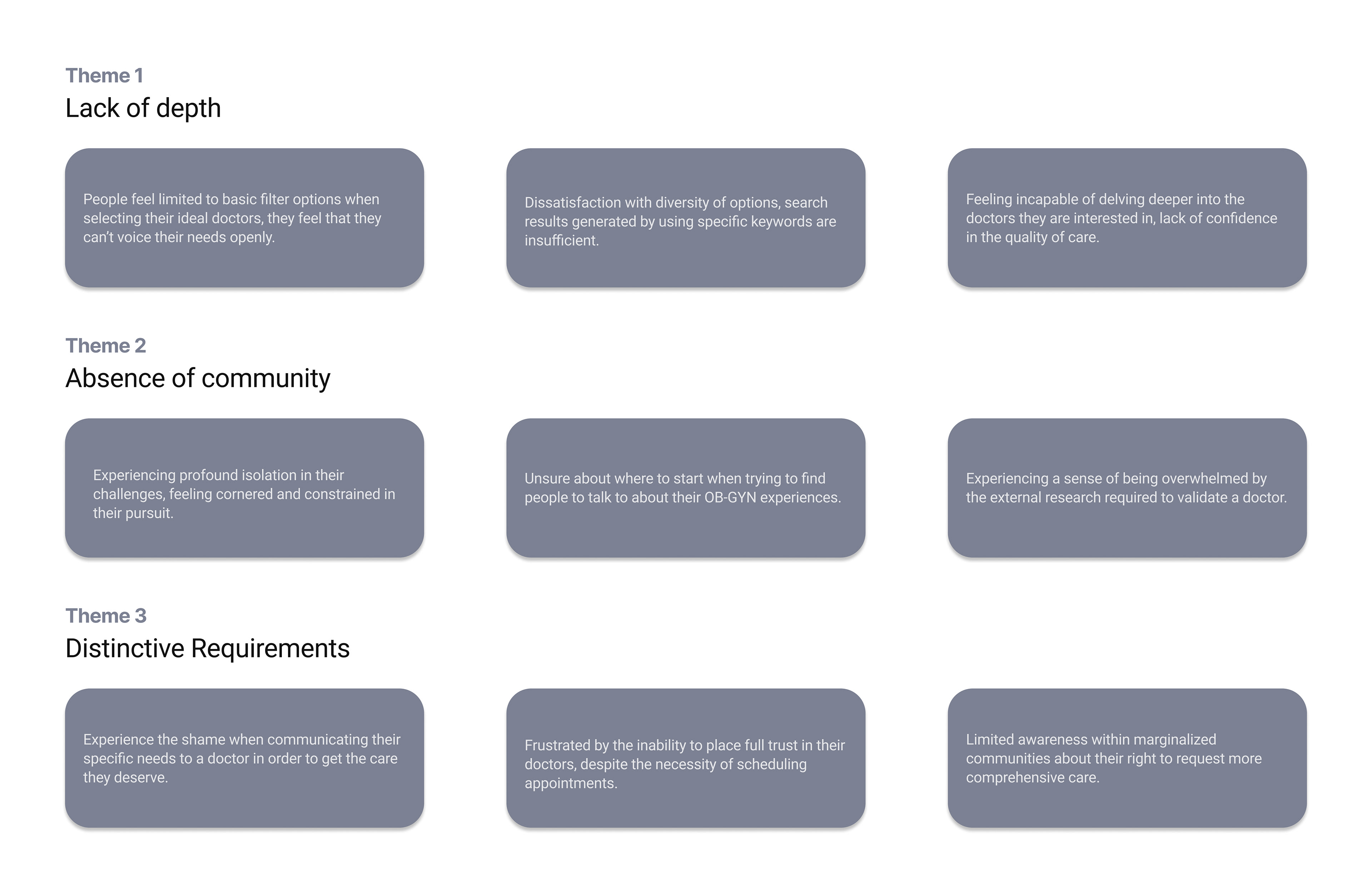
Our guiding principles - autonomy, agency, reassurance, and inclusivity - shaped every aspect of our design. Our affinity map analysis highlighted the need for an inclusive exploration process that reflects diverse identities. Given that health inequity stems from systemic racial and economic disparities, our design focuses on helping users feel recognized, supported, and valued.
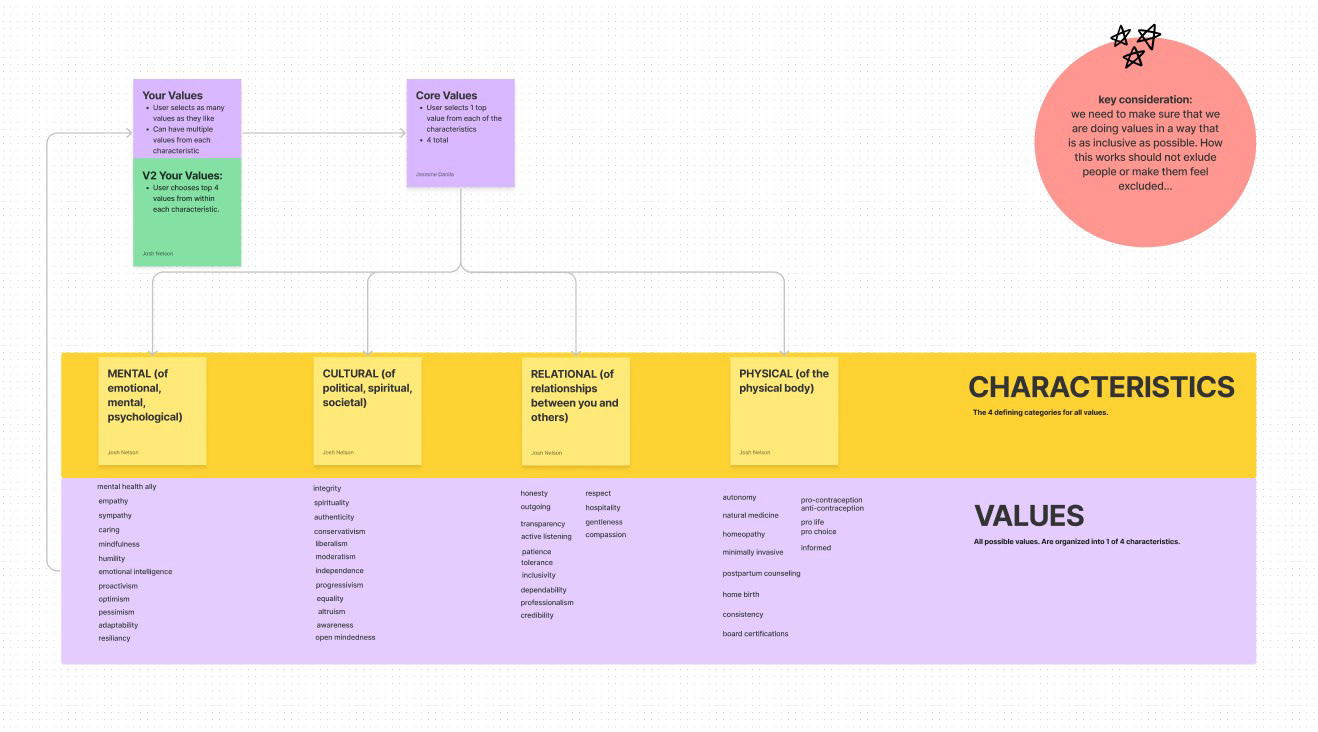
Mapping Out The Concept
We organized the values we came up with according to the 4 defining categories or characteristics listed such as:
Mental, cultural, relational, and physical
The key consideration was to enable people to approach their search with a sense of empowerment and control.
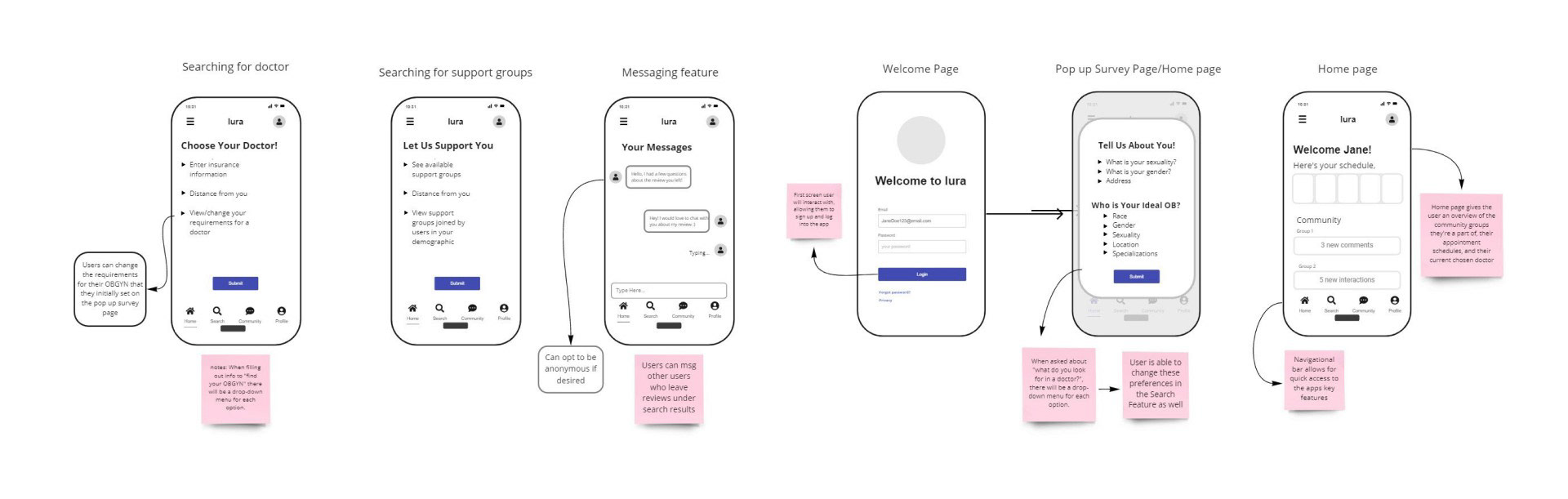
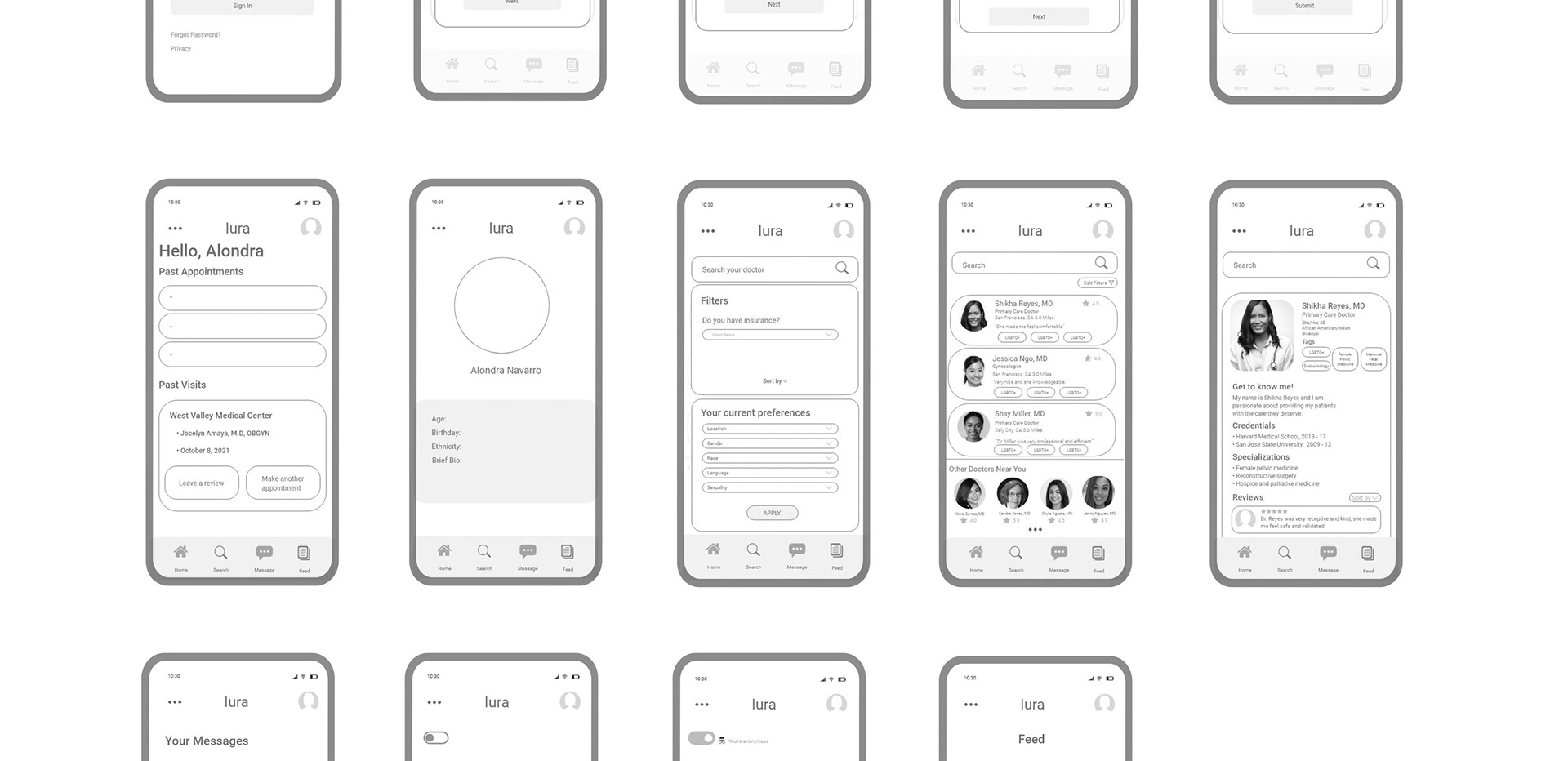
Translating Concepts into Wireframes
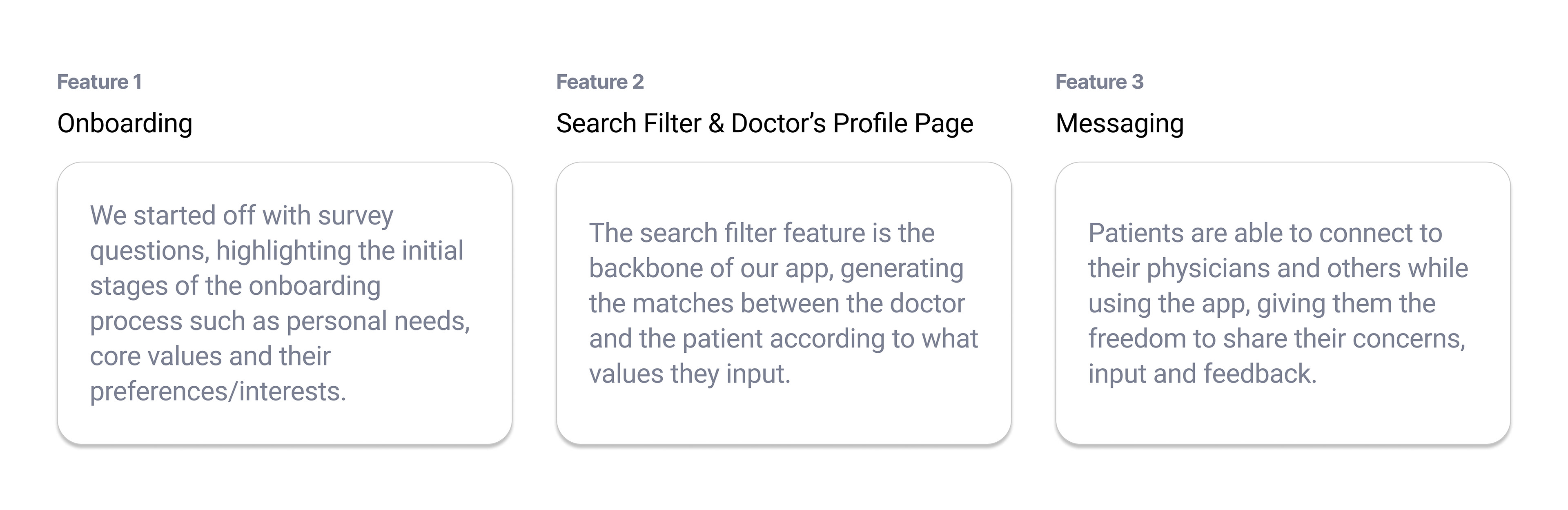
Iura's Core Features
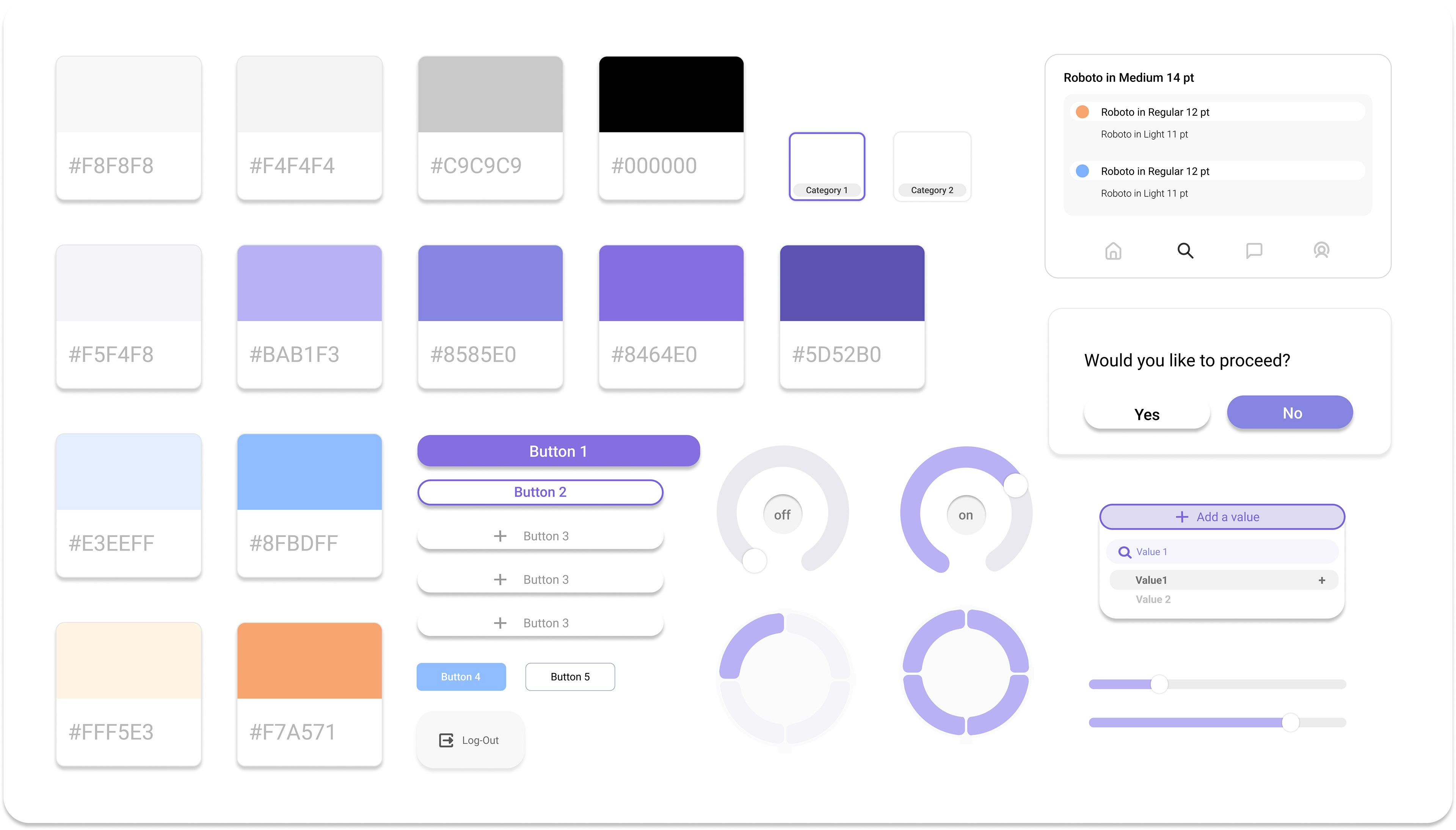
Design System
Customizing the experience
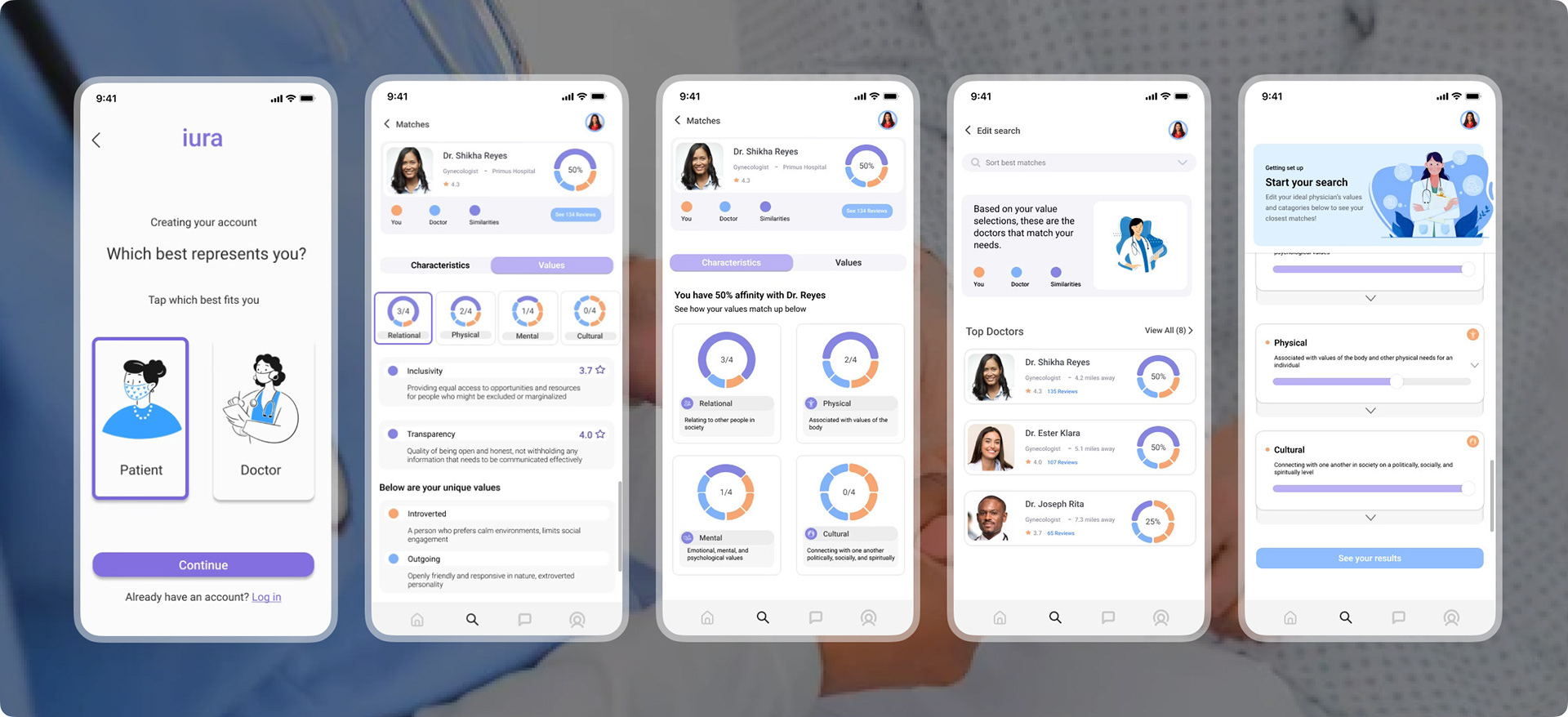
To support more meaningful physician-patient connections and move beyond surface-level categorization,
Iura guides patients to select core values across physical, mental, cultural, and relational aspects of their lives.
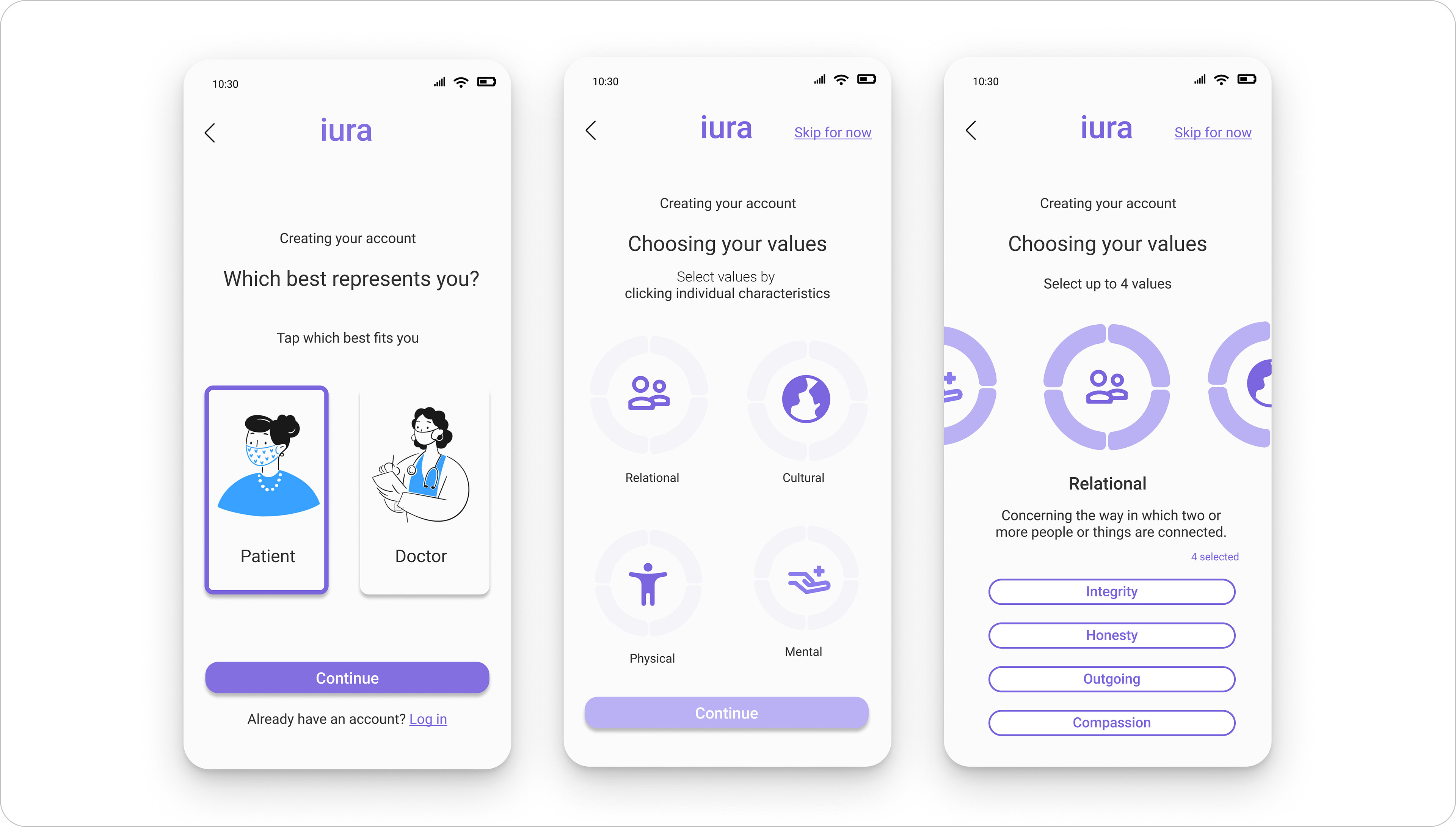
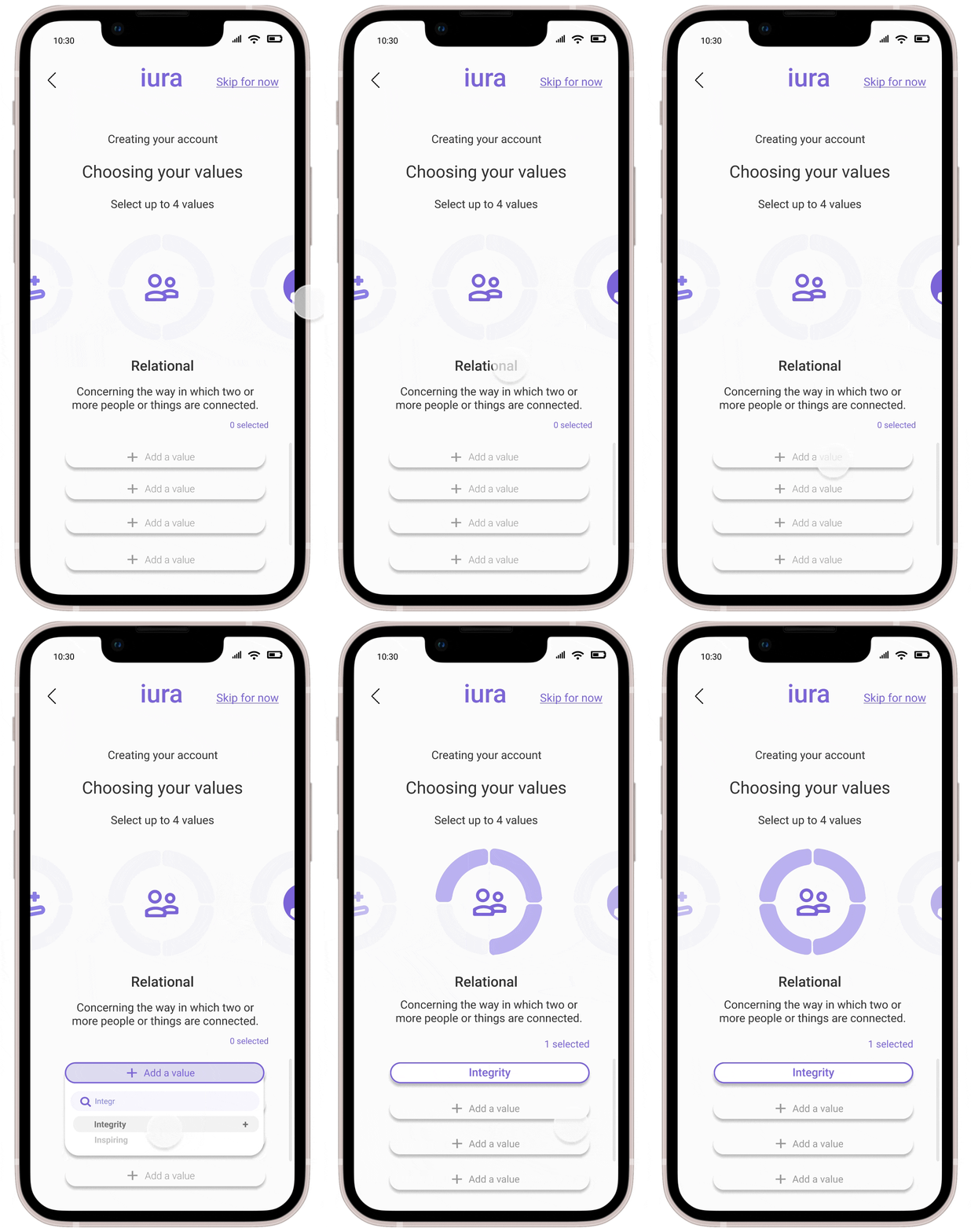
Selecting Core Values
The app prompts patients to select core values under Physical, Mental, Cultural, and Relational characteristics which helps refine the matching process.
The feature serves as Iura's foundation for creating personalized matches.
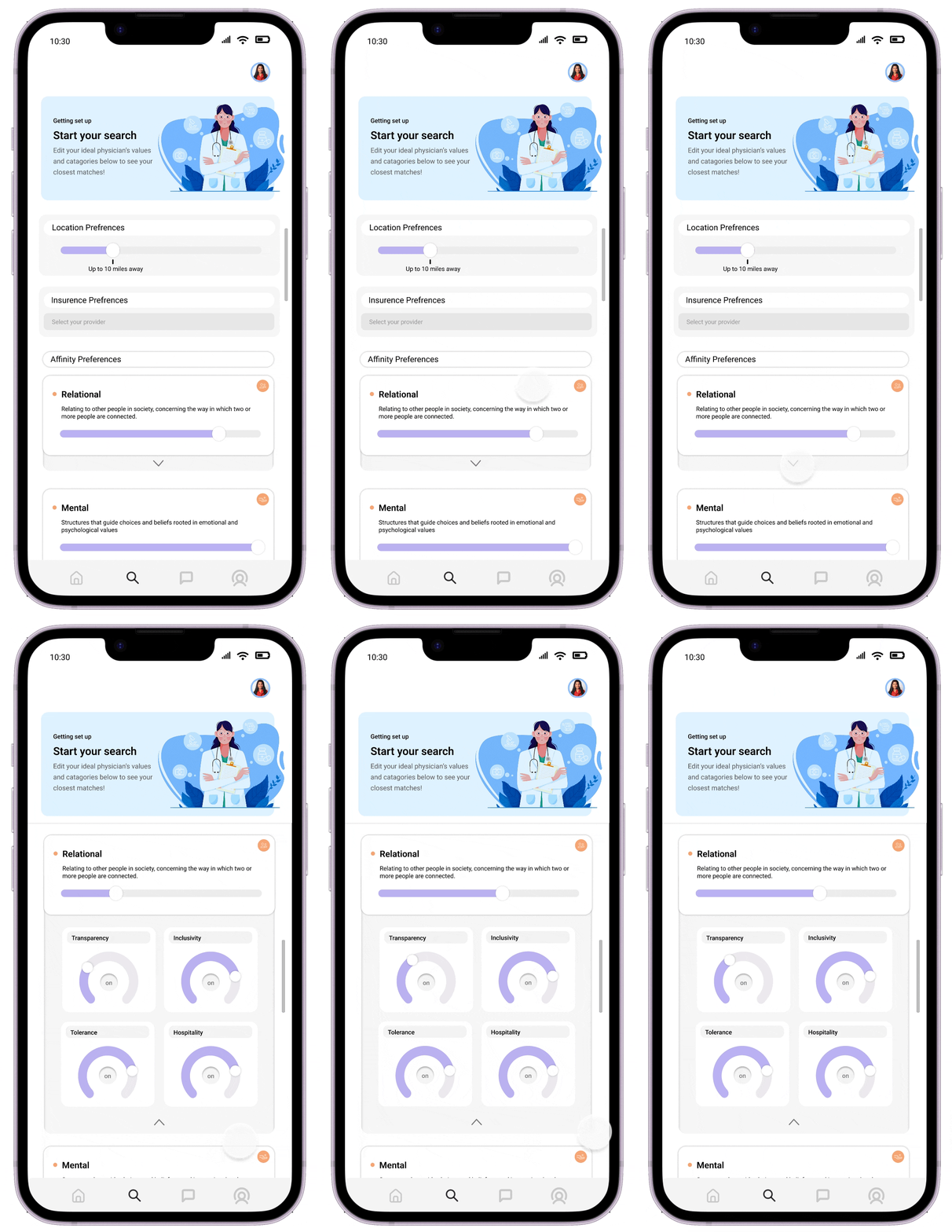
Starting the search
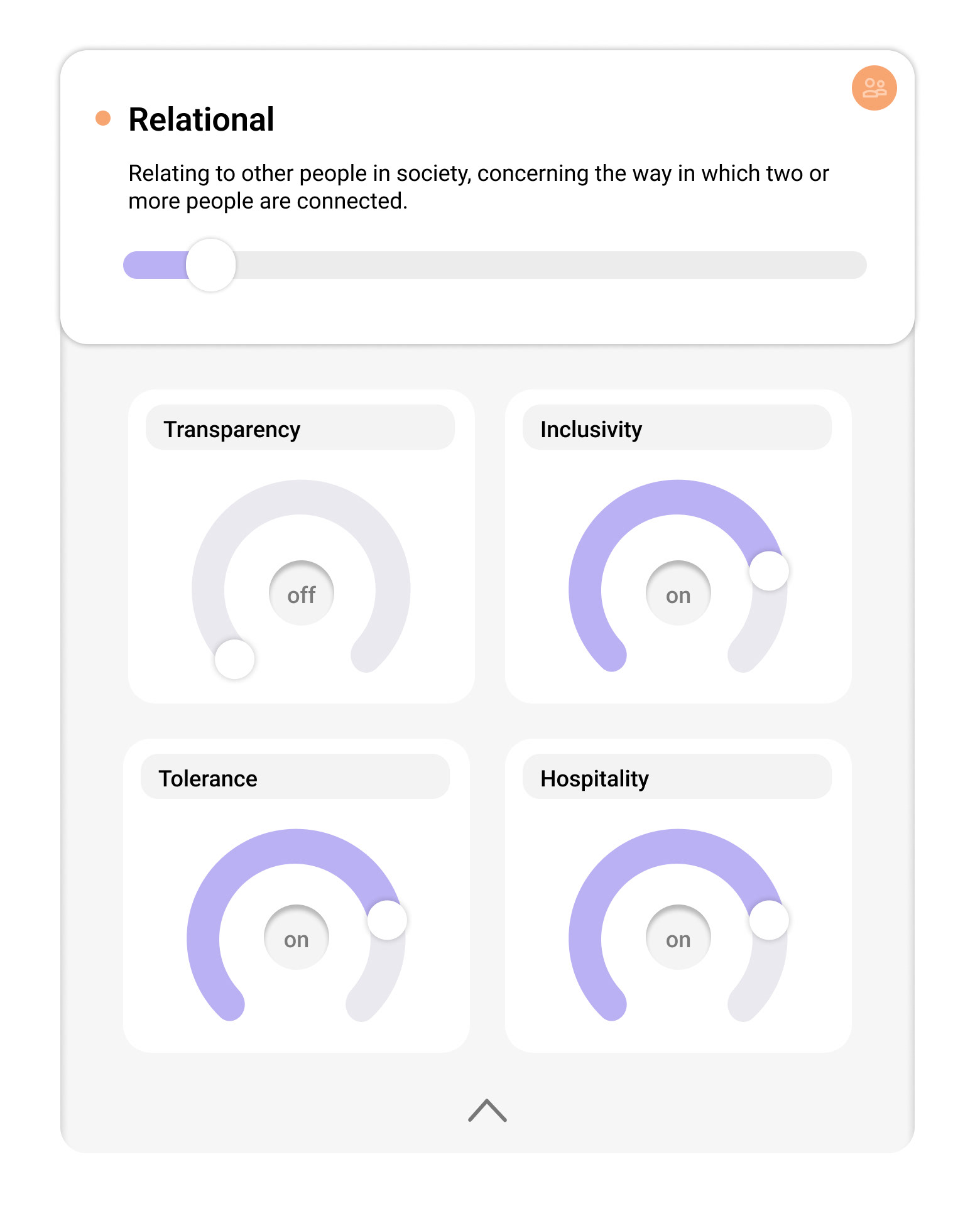
To find the closest match, patients are prompted to input their ideal physician's values. Using sliders, they can indicate how important it is for their physician to align with each of their chosen characteristics.
The physician's value options are based directly on the patient's own selections from onboarding.
Giving the power to the patients
After receiving their top matches, patients can explore the affinities and key differences with each physician to make a well-informed decision.
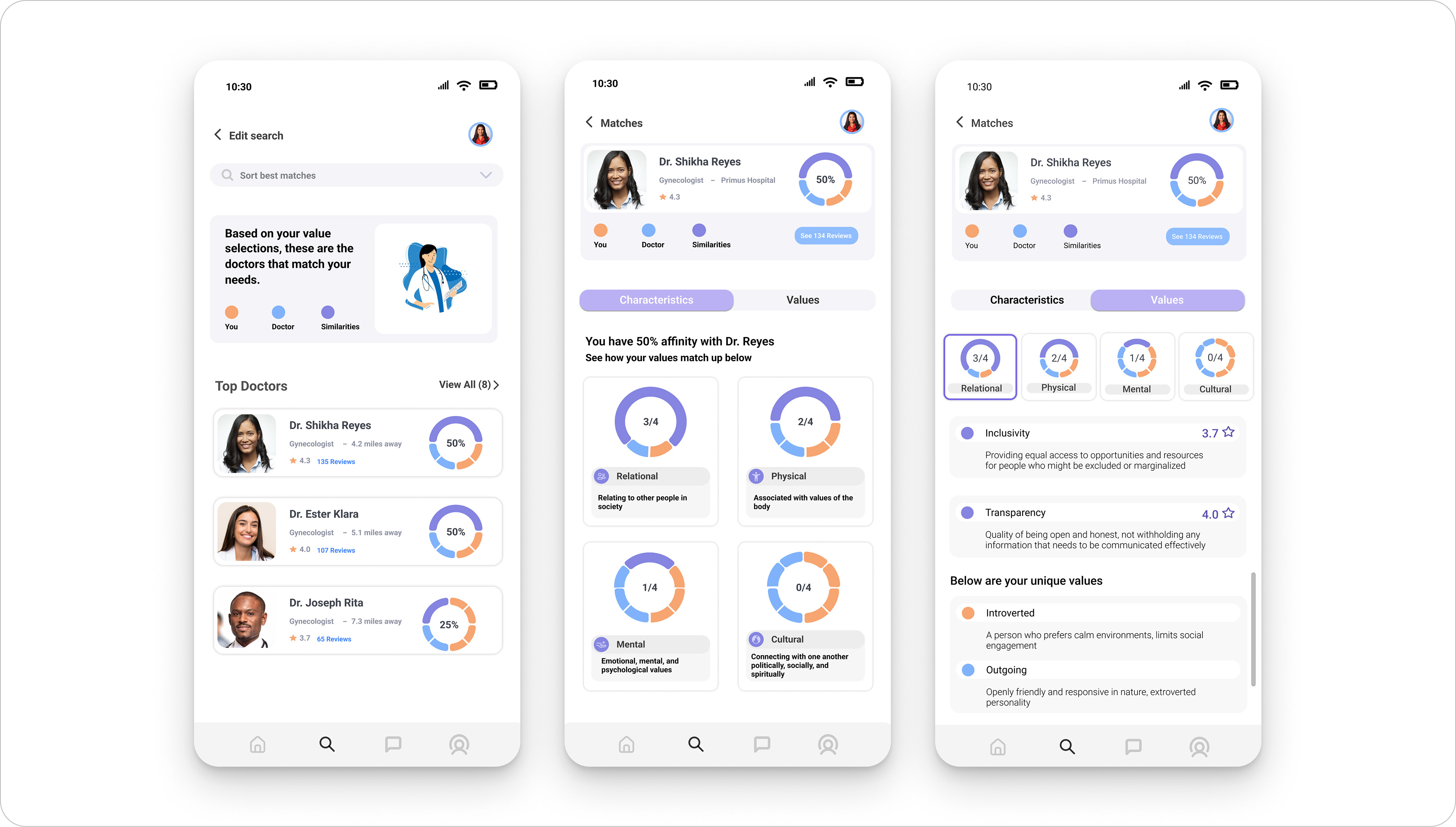
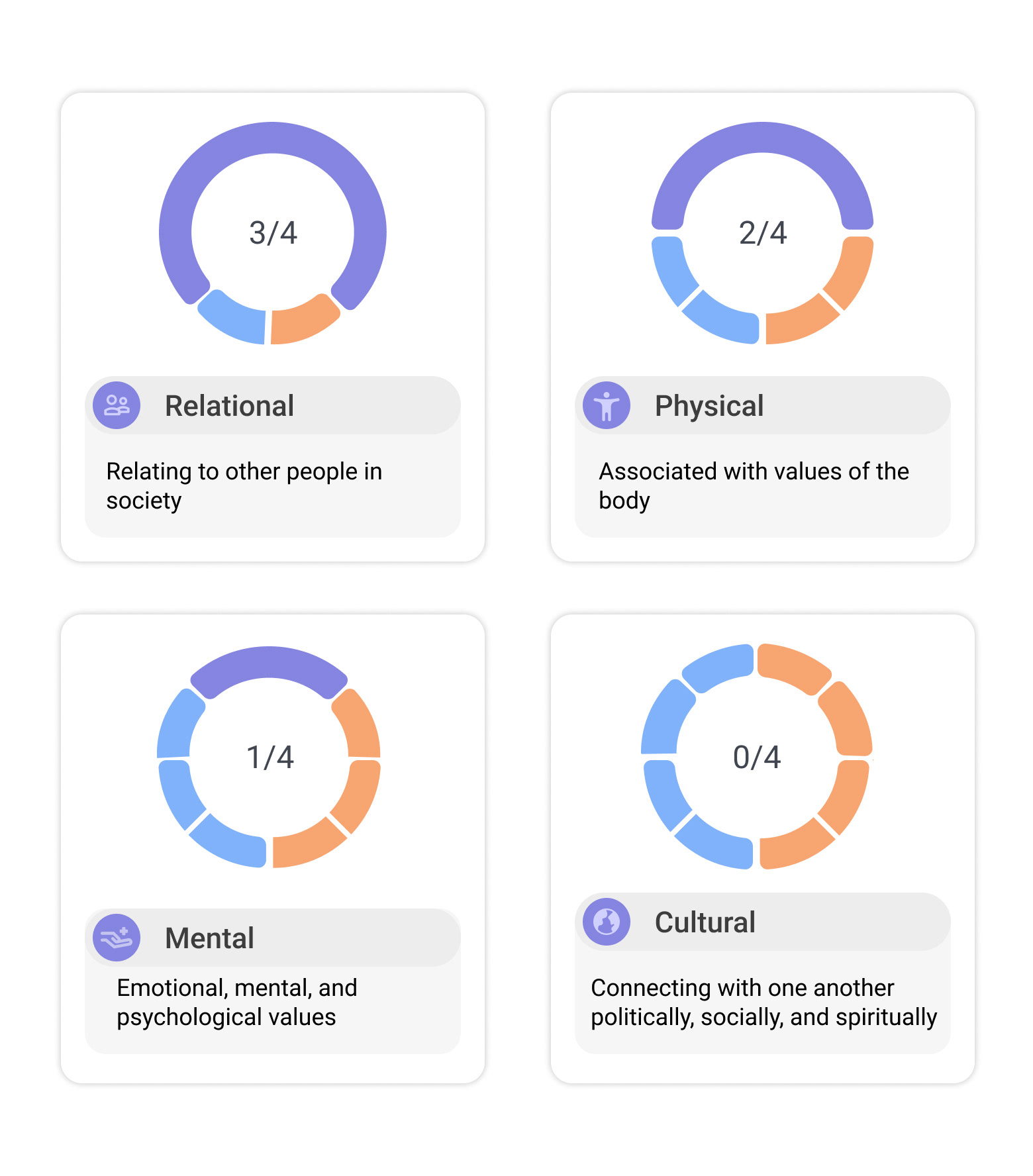
How the matching system works
Level 1 - Shows the overall matches between the
patient and multiple doctors nearby.
Level 2 - Visual representation of each characteristic
in a categorical level.
Level 3 - Shows the matching and unique values for each characteristic between the doctor and patient.
The impact of community engagement
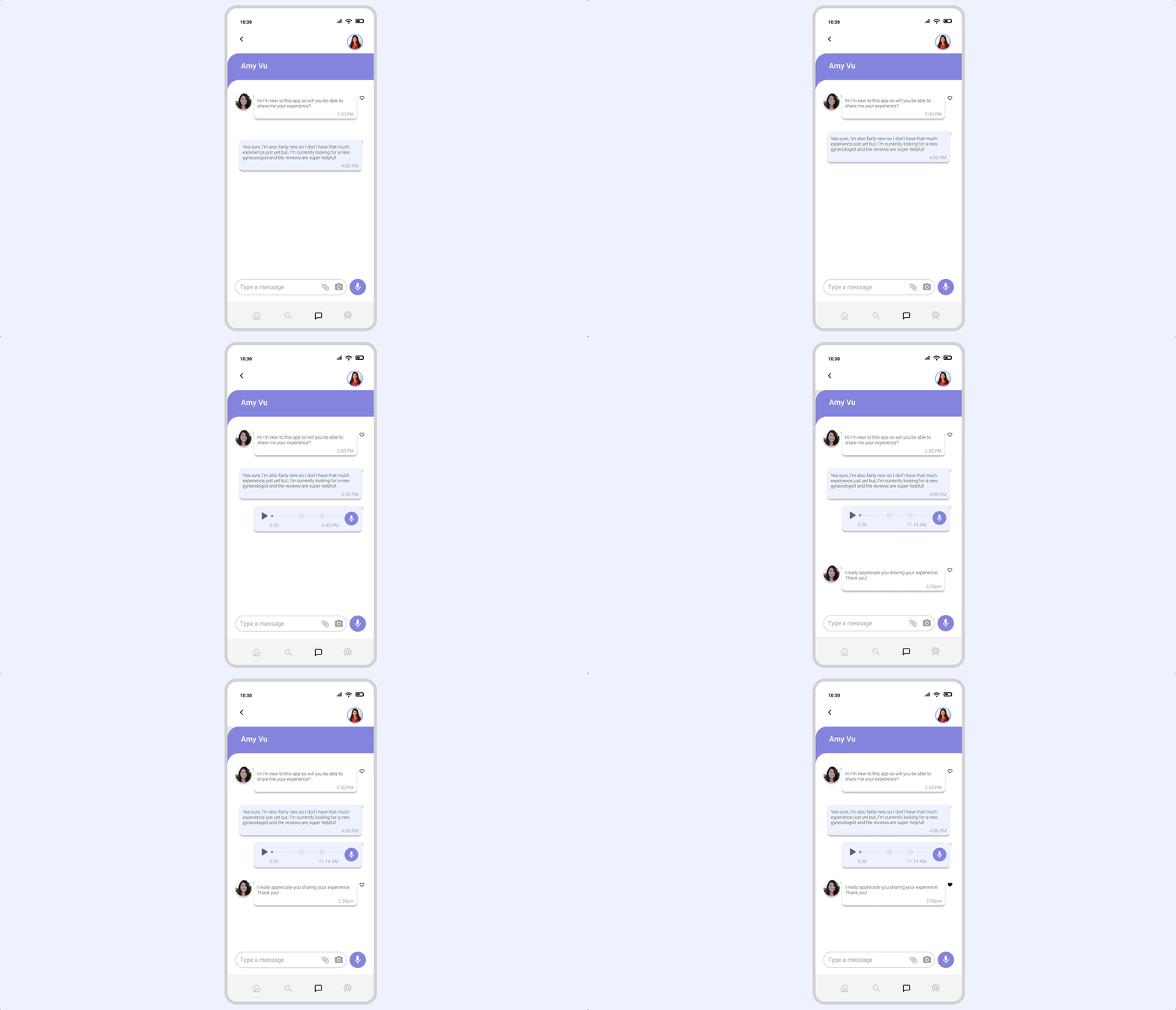
To encourage open dialogue, community growth, and patient engagement, Iura allows users to review physician ratings and connect with one another.
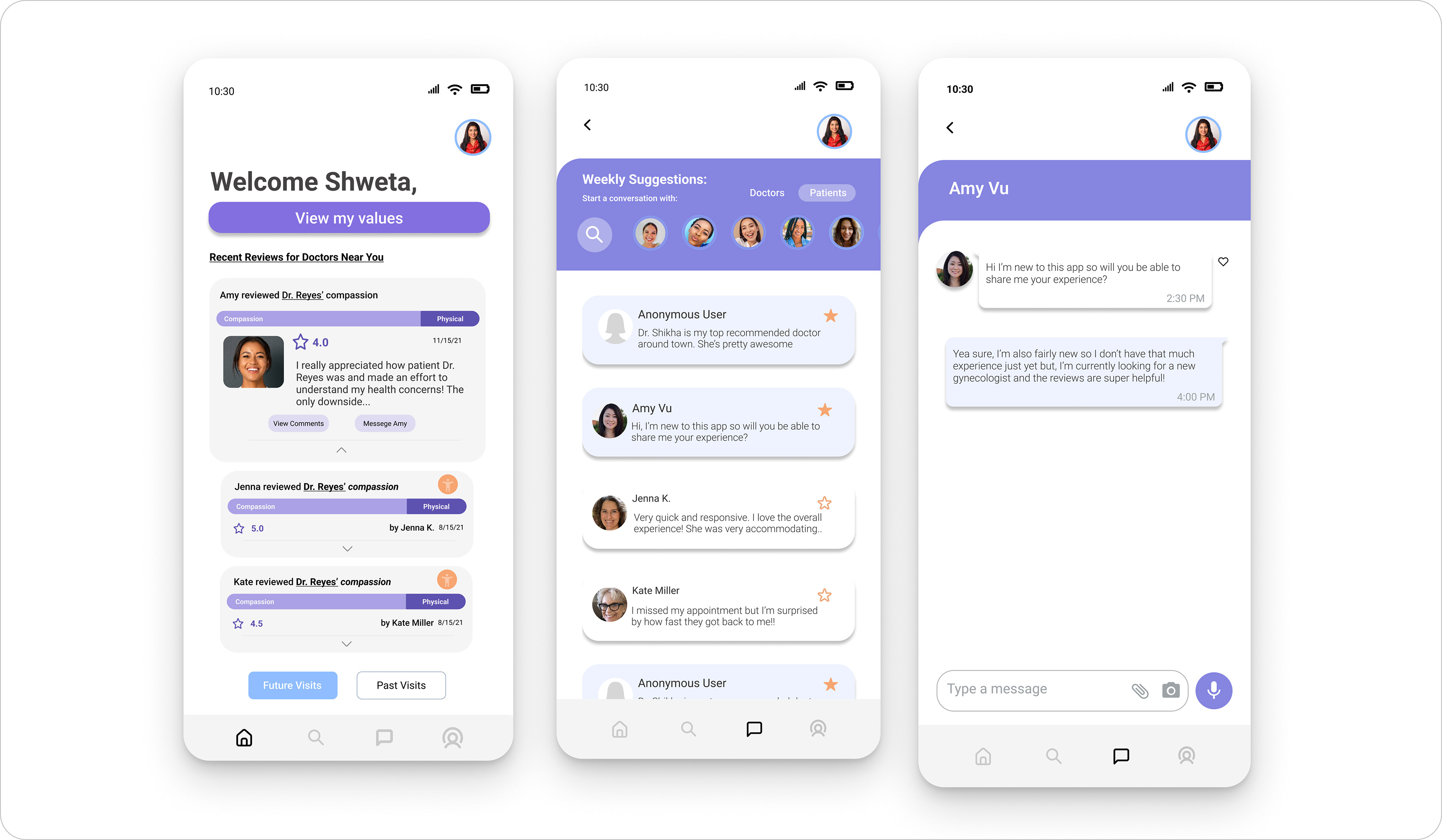
Embracing Diversity
Socially driven communities provide platforms for sharing experiences, fostering dialogue, and raising awareness about the importance of diversity in OB-GYN care. By encouraging community driven representation, we can cultivate a more equitable and empathetic healthcare landscape.
What We Learned
One of the challenges during the culmination of our design journey was the hard conversations that resurfaced. In order to meet our criteria of closing the gap between our users' expectations and the challenges of our current healthcare system, these difficult conversations needed to be unpacked. Applying trauma-informed design principles helped us challenge our own biases and grow as designers in a deeply-transformative way, shaping not just our work but how we approach users with empathy.